
Navigating Quicksand: Anxiety Management and Vulnerability
Therapist and author Monica Pitek-Fugedi joins Natasha Ozybko to discuss managing anxiety in the trades, her "Anxiety Keychain" strategies, and the power of vulnerability.
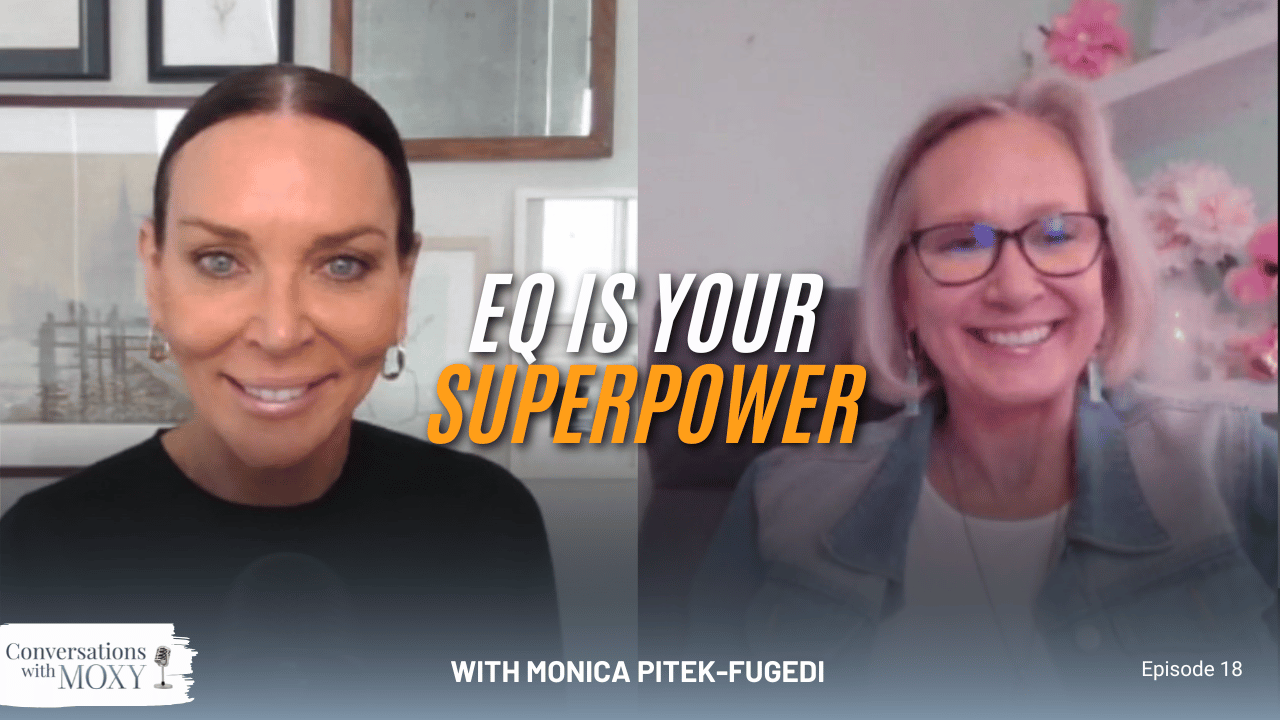
In this eighteenth episode of Conversations with MOXY, host Natasha Ozybko talks with Monica Pitek-Fugedi, a therapist, speaker, and author who specializes in anxiety and trauma treatment. The discussion centers on the necessity of normalizing mental health conversations in professional settings, practical strategies for managing anxiety, and the transformative power of vulnerability and a values-driven life.
From Education to Empowerment
Pitek-Fugedi shares her non-linear professional path, which began in business and event planning before she found her true calling in counseling. After earning a master’s degree, she spent 17 years as a high school and wellness counselor, where she identified massive untapped needs for mental health conversations among students, parents, and staff. Monica eventually opened her own private practice in Michigan to make a bigger impact, focusing on helping "everyday people" understand themselves and overcome hidden struggles. Bringing Therapy to the Masses: Through public speaking and writing, Pitek-Fugedi works to provide mental health resources to those who may be unable to access or afford traditional therapy, with the goal of erasing the stigma around seeking help.
Navigating the "Quicksand" of Anxiety
A core technical segment of the episode focuses on Pitek-Fugedi’s framework for managing anxiety, which she compares to navigating quicksand.
Stop Fighting Just as fighting quicksand causes one to sink deeper, fighting anxiety creates more overwhelm. Acceptance and acknowledging the feeling without judgment is the first step toward management.
Personify and Interrogate She suggests asking, "If this anxiety had a voice, what would it be telling me?". This helps personify the anxiety as something separate from the individual and allows them to tackle the specific story the brain is creating.
Take it to Court Use logic to challenge anxious thoughts by asking, "Can I prove this in a court of law?". Since anxiety is rarely based on rational proof, this step encourages looking for alternative, non-catastrophic outcomes.
The Anxiety Keychain To provide tactile support during high-stress moments, she created a physical keychain featuring ten strategies such as utilizing calming scents to ground the amygdala and using "diffusion" language like "I'm having the thought that..." to reconnect the brain's rational prefrontal cortex.
Vulnerability as a Connector
Pitek-Fugedi recounts how her personal journey with breast cancer forced her to embrace public vulnerability.
Reinventing Identity Losing her hair forced her to move past identifying as "the tall, thin blonde" and discover her multidimensional worth.
The Elephant in the Room By personifying her situation with a stuffed animal elephant, she found that her transparency invited others to share their own hidden stories.
Living Values, Not Emotions She emphasizes that while emotions can lead us astray, making decisions based on a core value system keeps us on track through obstacles.
Conclusion: "Do the Next Right Thing"
Pitek-Fugedi concludes by urging those overwhelmed by anxiety to abandon "analysis paralysis" by simply identifying and executing the "next right thing”, no matter how small. She reminds the MOXY community that mental health is not gendered and is non-negotiable for productivity and connection in the workplace. Her final advice is to practice self-care as a necessity, not a luxury: "Put on your oxygen mask first so you can show up as your best self for everyone else".