
Breaking the "Good Student" Trap: Confidence and Career Strategy
Certified coach Jackie Ghedine joins Natasha Ozybko to discuss how women can move from "doers" to "leaders," overcome Imposter Syndrome, and build strategic confidence.
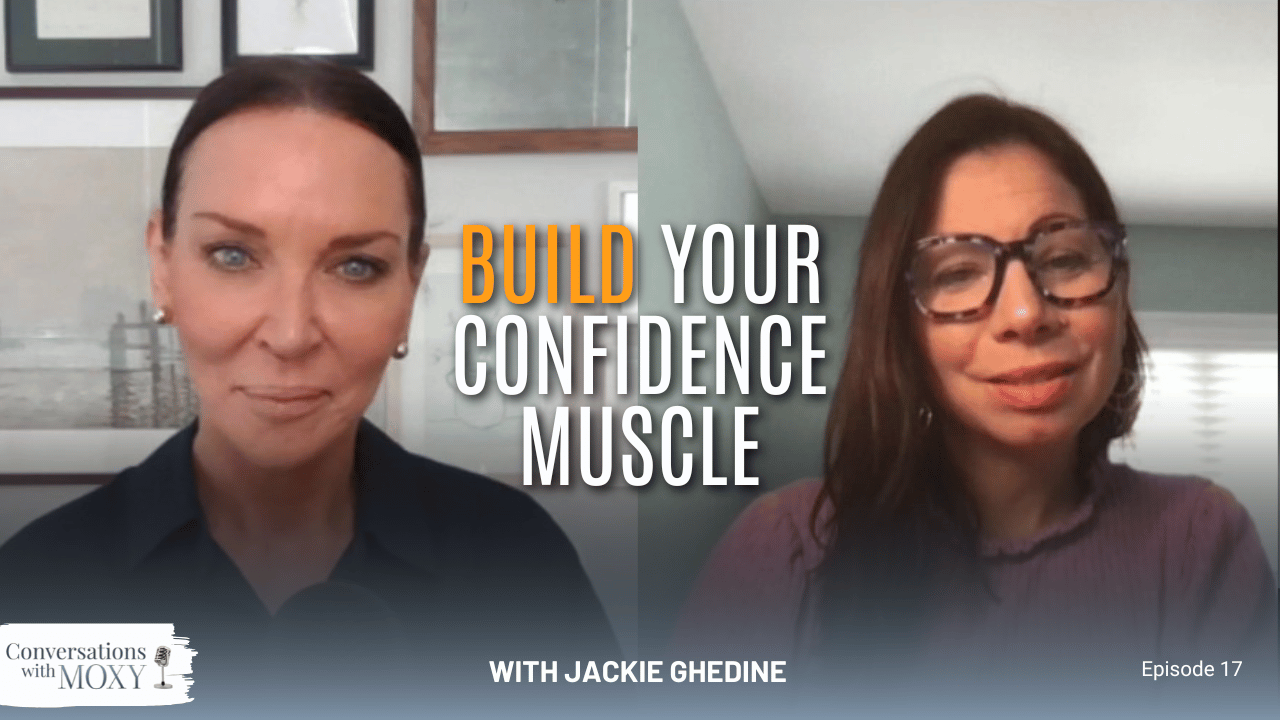
In this seventeenth episode of Conversations with MOXY, host Natasha Ozybko talks with Jackie Ghedine, a certified coach and co-founder of Modern Moguls. The conversation focuses on the "confidence gap" that often stalls women's careers, the critical transition from being a "doer" to a "leader," and how to manage the unique internal and external hurdles women face in the professional world.
From Media Executive to Career Architect
Jackie Ghedine spent 20 years in the fast-paced world of advertising and media, leading large sales teams and managing substantial P&Ls. Despite her corporate success, she transitioned into professional coaching to address a persistent pattern she observed: high-achieving women often reached a "stuck" point in their careers.
Through Modern Moguls, she now provides strategic career architecture for women, helping them move beyond the daily grind of technical tasks into roles of strategic influence and executive leadership. She emphasizes that while women are often the best "doers" in an organization, they must intentionally shift their mindset to be seen as leaders.
Closing the Confidence Gap
The central theme of the discussion is the confidence gap. Ghedine notes that many women suffer from "Imposter Syndrome" or the "Good Student Syndrome"—the belief that if they just work harder and keep their heads down, someone will eventually notice and reward them.
She challenges this notion with several key strategies:
The "Rule of 60%": Ghedine reminds the audience that men often apply for jobs when they meet only 60% of the criteria, while women wait until they meet 100%. She encourages women to "take the leap" based on their potential rather than just their past achievements.
Recognizing Choice: She posits that the moment a woman feels "stuck," she must recognize she has choices. Simply identifying that one has agency immediately shifts the internal power dynamic from a victim mindset to a leadership mindset.
Building Your "Board of Advisors": Ghedine advocates for women to build a robust support system, including mentors for guidance, sponsors for advocacy, and peers for emotional support.
The Pivot from "Doing" to "Leading"
Ghedine and Ozybko discuss the dangerous trap of being "too good" at a technical role. In the construction and infrastructure industries, women are often praised for their detail-oriented work, which can inadvertently keep them pigeonholed in middle management.
Ghedine argues that to move up, women must:
Delegate the "Doer" Work Intentionally pass off technical tasks to others to create space for strategic critical thinking.
Communicate Strategic Value Instead of reporting on what was done, focus on the impact and the future business implications of those actions.
Own the Room Practice "Authority Language"—speaking with conviction and avoiding diminishing phrases like "I just think" or "I might be wrong".
The Business Case for Confidence
The conversation reinforces the "MOXY" through-line that diversity is a business imperative. Ghedine points out that when women lack the confidence to speak up, the company loses out on innovative ideas and diverse perspectives, which directly harms the bottom line. She encourages male leaders to be proactive in inviting women to share their thoughts, recognizing that a quiet presence at the table is a wasted corporate asset.
Conclusion: Stop Staying Stuck
Ghedine concludes by urging women to stop waiting for permission to lead. She reminds the community that "confidence is a muscle" that only grows through action and repetition. By seeking support, recognizing their inherent value, and choosing to act despite fear, women can break through the glass ceiling and redefine leadership in the infrastructure space.