
The Physics of Protection: Life Safety and Technical Leadership
Life safety expert Loui McCurley joins Natasha Ozybko to discuss work-at-height evolution, human-centric safety standards, and leading a global manufacturing firm in infrastructure.
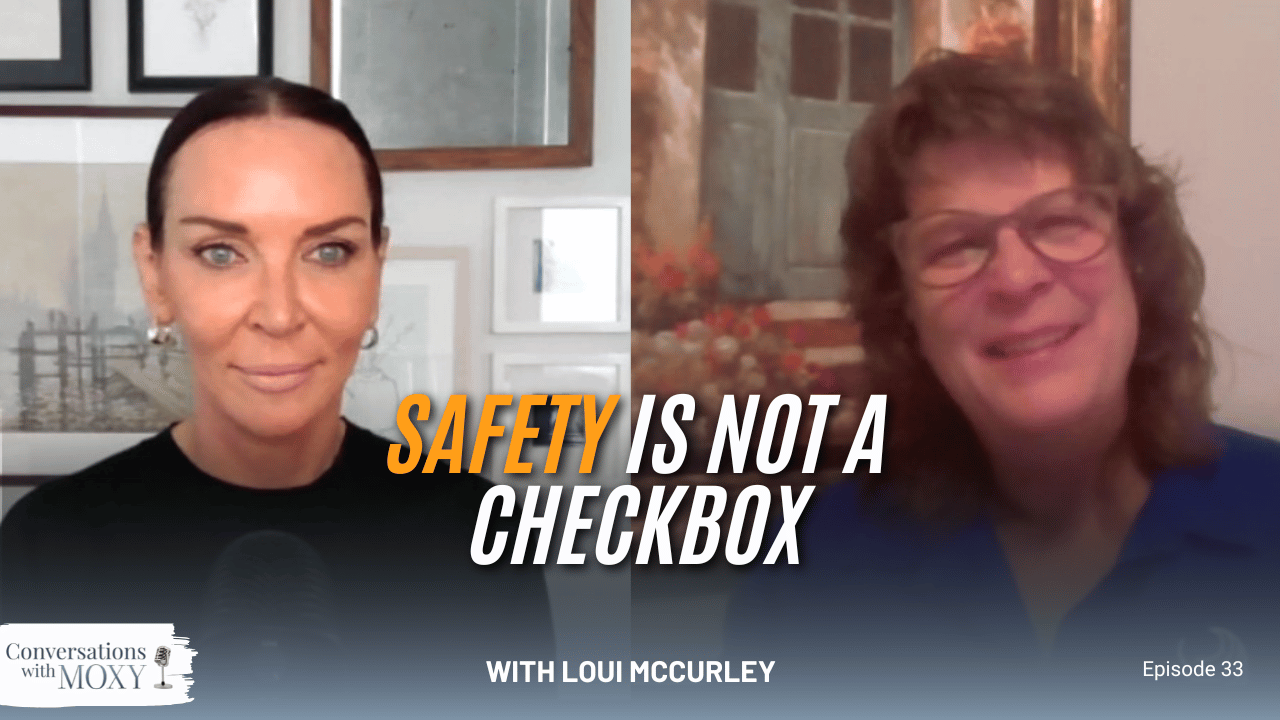
In this thirty-third episode of Conversations with MOXY, host Natasha Ozybko sits down with Loui McCurley, CEO of Pigeon Mountain Industries (PMI) and a globally recognized expert in life safety, work-at-height, and rescue operations. The conversation explores McCurley’s journey leading a technical safety manufacturing firm, the critical evolution of safety standards, and how intentional leadership can protect workers while fostering a culture of innovation.
A Legacy of Life Safety
Loui McCurley grew up in the world of high-stakes safety, as her father was a pioneer in the development of life-safety ropes. She discusses taking the helm of PMI and transforming it into a global leader in providing equipment and training for rope rescue, industrial work-at-height, and arboriculture.
McCurley emphasizes that her technical expertise is rooted in a deep respect for the physics of safety. She discusses the challenges of being a woman leading a manufacturing and safety firm in a male-populated sector, noting that technical credibility and a "learner’s mindset" (referencing a recurring series theme) were essential to earning the trust of industry veteran peers.
The Evolution of Work-at-Height Safety
A central theme of the episode is the shift from "compliance-based safety" to "human-centric safety". McCurley argues that safety should not just be about following a regulation, but about understanding the human physiological response to height and stress.
Beyond the Harness She points out that simply wearing a harness is insufficient; workers must be trained in correct fit and rescue procedures to prevent "suspension trauma".
The "PPE for All" Standard McCurley advocates for safety gear designed for diverse body types. She notes that ill-fitting equipment is a major risk factor for women and smaller-statured men, as it can fail to arrest a fall correctly or cause secondary injuries.
Standards Advocacy She discusses her extensive work with organizations like ANSI and NFPA to develop global standards that prioritize worker well-being across different industrial environments.
Leading with Intention and Resilience
Ozybko and McCurley explore the psychological parallels between rescue operations and business leadership. McCurley argues that the "Power To" paradigm (referencing Episode 16 with Gloria Feldt) is vital in safety, where collaboration and clear communication often make the difference between life and death. She encourages leaders to build teams that can adapt to rapid changes, whether on a project site or in the market. In breaking the "tough" stigma, McCurley echoes previous episodes by noting that admitting vulnerability or a lack of knowledge in safety is a leadership strength. A culture where people are afraid to speak up is an inherently dangerous culture.
Stewardship and the Global Impact
The conversation reinforces the "MOXY" through-line of stewardship. McCurley views her role as an industry expert as a responsibility to educate and protect the global workforce. She discusses the "ripple effect" of safe infrastructure, noting that when workers are protected, communities thrive. She encourages other women in the technical trades to "own their expertise" and see themselves as essential guardians of the built environment.
Conclusion: Safety is a Choice
McCurley concludes by reminding industry leaders that safety is not an "expense" but an investment in their most valuable asset: human lives. She urges executives to move past the "checked box" mentality and embrace safety as a core cultural value. Her final advice to the community is to "never stop learning," as the technical and human aspects of safety are constantly evolving.