
Reworking the System: Operational Equity and Unconscious Bias
DEI strategist Stacey Gordon joins Natasha Ozybko to discuss unmasking unconscious bias, moving beyond performative diversity, and reworking corporate systems in infrastructure.
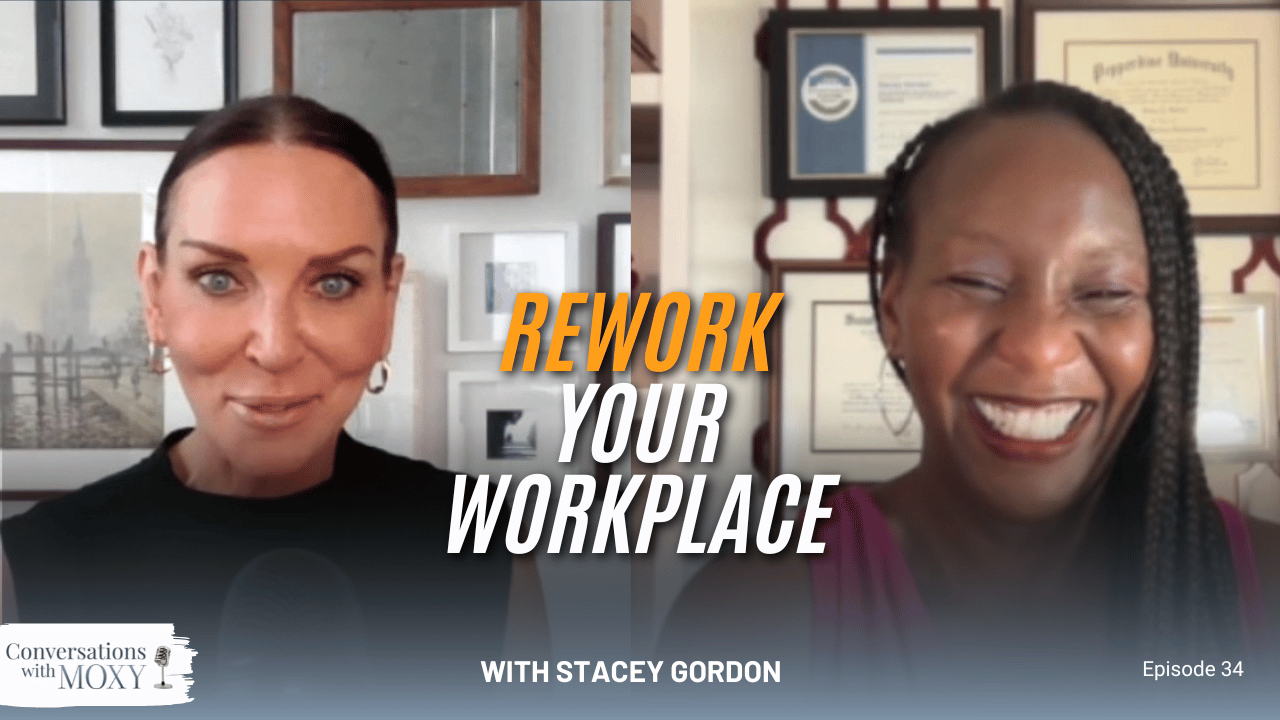
In this thirty-fourth episode of Conversations with MOXY, host Natasha Ozybko chats with Stacey Gordon, an executive advisor, DEI strategist, and founder of Rework Work. The discussion focuses on the critical shift from performative workplace diversity to operationalized equity, the nuances of unconscious bias, and how intentional leadership can build cultures where every employee has a clear path to success.
From Recruiting to DEI Strategy
Stacey Gordon’s expertise is rooted in her background in recruiting and executive search. She realized early in her career that companies often claimed they couldn't find diverse talent, when the real issue was a flawed recruitment process and a lack of inclusive culture. This led her to found Rework Work, where she helps organizations "rework" their systems to eliminate bias and improve retention.
Gordon emphasizes that in the technical and industrial sectors, diversity is no longer a "nice to have" but a operational necessity. She argues that the infrastructure industry, which is heavily male-populated, must be particularly intentional about how it welcomes and develops women and underrepresented groups to survive the current workforce crisis.
Unmasking Unconscious Bias
A central theme of the episode is the psychology of unconscious bias. Gordon explains that bias is not necessarily a sign of bad character, but a cognitive shortcut that can lead to exclusionary decision-making.
The "Like-Me" Bias Gordon discusses how leaders often hire and promote people who remind them of themselves, which creates an "Old Boys' Loop" that stifles innovation.
Impact over Intent She echoes a recurring series theme: while most leaders have good intentions, it is the impact of their actions on marginalized workers that determines whether a culture is truly inclusive.
Naming the Problem Gordon posits that organizations must be brave enough to name the specific biases at play in their performance reviews and promotion tracks before they can fix them.
Moving Beyond "Check-the-Box" DEI
Ozybko and Gordon delve into the dangers of performative DEI. Gordon argues that many companies treat diversity as a "social program" or a one-time workshop rather than an integral part of business operations.
Operationalizing Equity She advocates for equity to be built into the "plumbing" of the organization—from how job descriptions are written to how bonuses are calculated.
The "Sponsorship" Gap: Gordon notes that while women are often over-mentored, they are severely under-sponsored. She encourages senior leaders to use their power to grant high-potential women direct access to the "pivotal" projects that lead to C-suite roles.
Retention as the Metric: She challenges executives to stop measuring success by recruitment numbers alone and instead focus on the "staying power" of their diverse hires.
Stewardship and Collective Accountability
The conversation reinforces the "MOXY" through-line of stewardship. Gordon believes that every employee, regardless of their rank, has a role in building an inclusive culture. She challenges senior executives to hold their middle management accountable for DEI outcomes, noting that the "frozen middle" is often where executive inclusive vision goes to die.
Conclusion: Lead with Courage
Gordon concludes by urging women in infrastructure to "own their narrative" and for leaders to lead with courage. She reminds the community that building a truly equitable workplace is a "long game" that requires constant vigilance and radical honesty. Her final advice to the industry is to "stop trying to fix the people and start fixing the process".