
Deep Innovation: Building Nuclear Reactors a Mile Underground
"Multi-preneur" Liz Muller joins Natasha Ozybko to discuss how deep borehole technology is solving nuclear waste and cost hurdles, and why technical leadership requires a learner's mindset
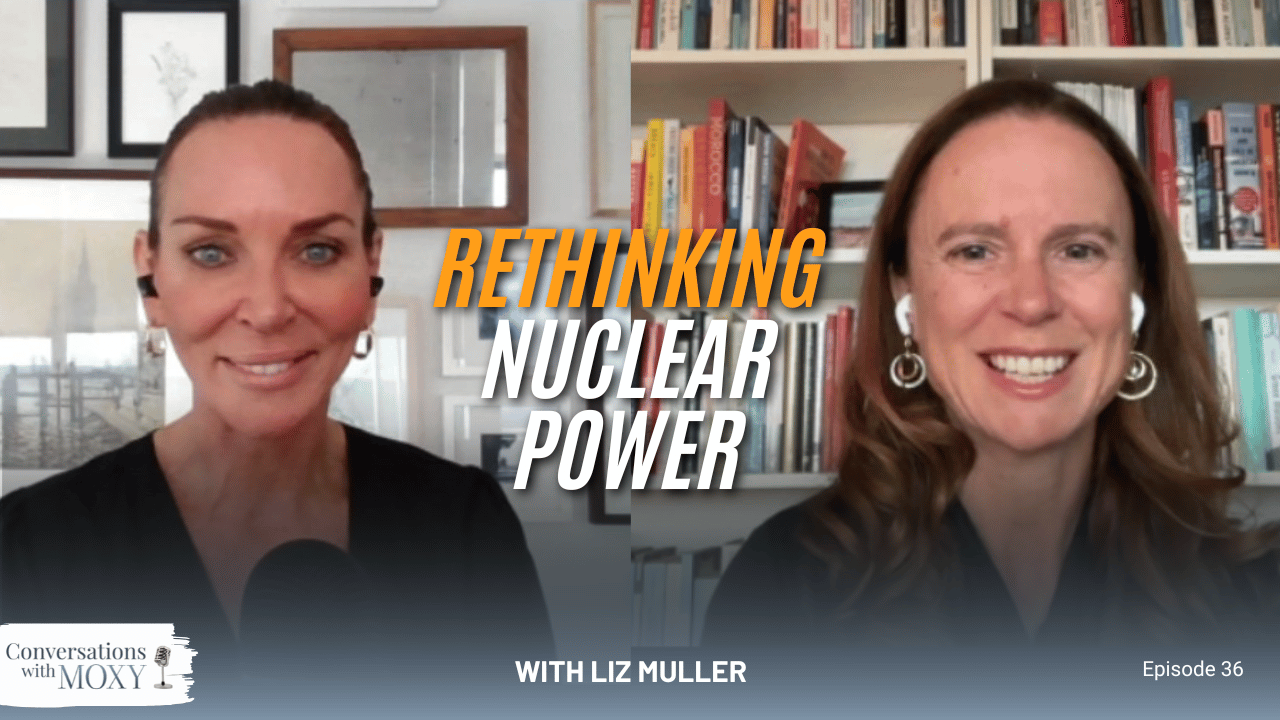
In this thirty-sixth episode of Conversations with MOXY, host Natasha Ozybko talks with Liz Muller, a "multi-preneur" and leader in the nuclear energy sector. The discussion explores the technical innovations making nuclear power more cost-effective, the shifting global perception of nuclear energy, and how leadership in technical fields requires an interest in learning rather than just prior credentials.
Innovations in Nuclear Energy: Deep Isolation and Deep Fission
Liz Muller discusses her journey as a founder of multiple companies dedicated to solving nuclear energy’s biggest hurdles. Deep Isolation focuses on nuclear waste disposal by placing spent fuel in boreholes a mile underground. Muller notes that the company has matured to a point where it no longer needs her daily operational lead, a "humbling moment" that allowed her to start her next venture. Emerging from calculations performed at Deep Isolation, Deep Fission explores building nuclear reactors deep underground. By utilizing the natural 160 atmospheres of pressure and massive rock containment found a mile down, Deep Fission aims to eliminate the massive construction overhead that traditionally makes nuclear power expensive.
The Shifting Perception of Nuclear Power
Muller highlights a gradual but significant shift in the conversation surrounding nuclear energy in the United States and abroad.
Global Warming & Reliability As concerns over global warming grow, there is an increasing realization that renewables like wind and solar require a reliable, "always-on" partner like nuclear to reach net-zero goals.
The Ukraine Catalyst The war in Ukraine accelerated European interest in nuclear power as countries realized they could no longer rely on natural gas and needed energy security for the winter.
Powering AI The massive electricity demands of data centers and AI are driving a "strong interest" in nuclear, as these companies need clean, reliable power as fast as possible.
Redefining Technical Leadership
A central theme of the episode is that leadership in infrastructure and energy does not require being a subject matter expert in every technical detail. Muller, who majored in math and business rather than nuclear engineering, emphasizes the importance of a "learner's mindset". She encourages women not to be hesitant just because they don't have all the answers initially. Both Ozybko and Muller advocate for recognizing the high-value skills gained through caregiving and raising children. Muller notes that being a mother made her a better manager and a "better people person" who understands how to motivate teams.To combat the "old boys' loop" in hiring, Muller uses AI to scout for diverse talent across different industries, bypassing the limitations of traditional networks.
Conclusion: A Bipartisan Future
Muller concludes by noting that nuclear power has become a rare bipartisan issue in the U.S., supported by both Republicans and Democrats as a means to achieve economic growth and address climate change. Her final advice to the industry is to embrace flexible, people-friendly work environments to attract the best talent—both men and women—necessary to build the future of energy.