
C-Suite Allyship
Bona Allen discusses stewardship, the ROI of professional development, and why the "old school" mindset is a business risk.
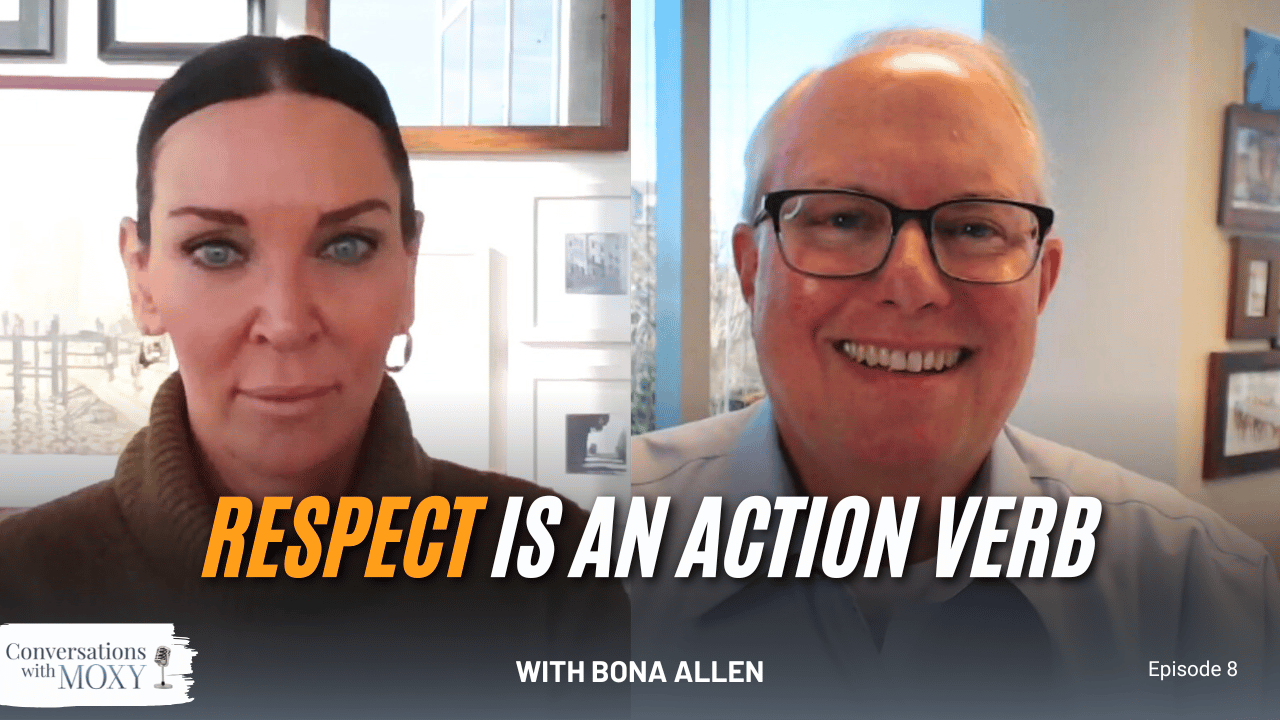
In this eighth episode of Conversations with MOXY, host Natasha Ozybko talks with Bona Allen, CFO and Senior Vice President of Kajima Building Design Group (KBDG). This episode provides a vital executive perspective on allyship, exploring how senior leadership can move beyond "checking the box" to foster a culture of stewardship and intentional inclusion in the construction industry.
The Unexpected Advocate
Bona Allen’s introduction to MOXY was organic; he discovered the platform on LinkedIn shortly after its launch in 2021. Recognizing it as a "much-needed medium," he reached out to Ozybko to offer his support. Ozybko notes that while Allen fits the "stereotypical" profile of senior leadership in construction—a white male in the C-suite—he has used that position of authority to actively champion inclusive practices within his organization and the broader industry.
Allen emphasizes that his commitment is not just personal but corporate. Kajima, a global entity, prioritizes finding the best talent regardless of background, a strategy Allen views as a fundamental necessity for staying competitive in a shifting marketplace.
Stewardship: Moving Beyond Mentorship
A significant takeaway from the conversation is the introduction of stewardship as a third pillar alongside mentorship and sponsorship.
Mentorship: A one-on-one relationship focused on guidance.
Sponsorship: Using one's influence to advocate for someone when they are not in the room.
Stewardship: The intentional management of time and resources to ensure the advancement of others.
Allen argues that leadership must steward the available talent by having an open mind about where that talent comes from. He advocates for looking beyond traditional recruitment pools and engaging with HBCUs, technical schools, and high schools to find "wonderful contributors" who might otherwise be overlooked.
The Business Imperative of the "Non-Traditional" Candidate
The discussion addresses the pervasive stigma surrounding non-traditional candidates, such as stay-at-home moms returning to the workforce. Ozybko points out that these individuals often possess highly developed skills in negotiation, planning, and multi-tasking that are directly applicable to construction management.
Allen’s response to hiring managers who refuse to entertain these candidates in favor of "Bob 2.0" is blunt: "Send those resumes to us. We’ll hire them in a second". He warns that companies clinging to an exclusionary mindset are "numbered" because they will eventually age out and fail to attract the talent necessary to survive the current labor shortage.
Systemic Accountability in the C-Suite
Allen provides a concrete example of how KBDG internalizes these values through a quarterly professional development program. Unlike traditional yearly reviews, this program is a company-wide initiative supported by the C-suite that focuses on:
Continuous Learning: Asking employees what they want to learn and where they want to go, even if they are currently happy in their roles.
Goal Tracking: Developing individual career goals and checking progress every three months.
Cross-Functional Mobility: Allowing employees to move laterally to learn new aspects of the business, such as matching an accounting professional with a project manager to gain site-level experience.
Allen stresses that this is not a program to be "turned over to HR" and forgotten. It requires active leadership to provide tools, delegate effectively, and then "get the hell out of the way" so people can do their jobs.
Conclusion: Respect as an Action Verb
Allen concludes with a powerful charge for both leaders and employees: Treat respect as an action verb. He challenges individuals to ask themselves daily, "What will I do today to show my level of respect for others and for myself?". In an industry often hampered by ego and resistance to change, Allen proves that intentional respect and an open mind are the most effective tools for building a profitable, sustainable, and inclusive future.